Why We Should Care about the Holy Land

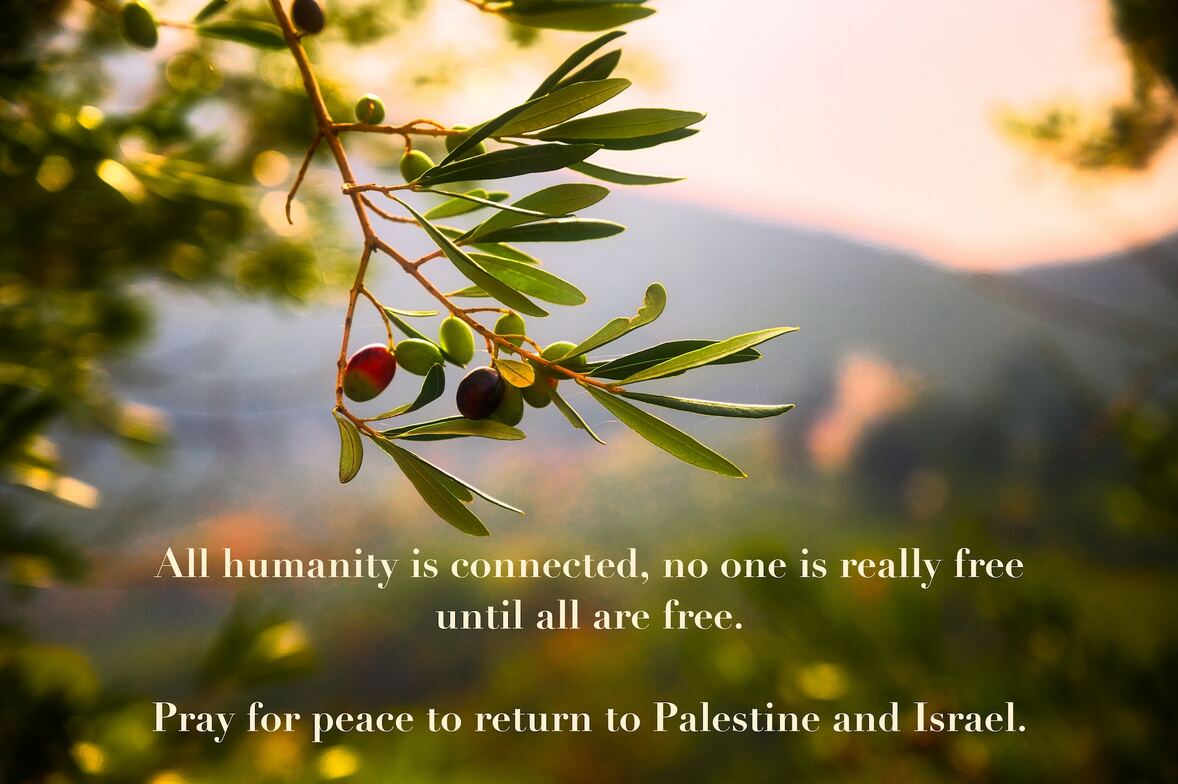
Why We Should Care About Palestine/Israel
In my All Saints Sunday sermon, I highlighted that just as the saints of the past bore witness to the gospel, so too are we called to bear witness today. To bear witness means bearing witness to the suffering of our neighbours, whether they live next door or across the world.
Furthermore, we are called not only to offer the comfort of the gospel but also to speak out against the injustices that are at the root of that suffering.
I then drew our attention to the suffering of people in the land we call Holy – the people of Israel and Palestine. We are called to care about the plight of both Palestinians and Israelis because, if we believe that all people are made in the image of God, then we have a responsibility to speak out against actions by individuals and governments that violate our God-given human dignity. When we become indifferent to the humanity, dignity, safety and future of people living in Israel and Palestine, we lose something fundamental to the very character of our Christian faith.
Today, I want to offer two more reasons why what is happening in the Holy Land should matter to us.
1. Because Israel/Palestine is inseparable from the Christian story
Christianity did not emerge in a vacuum. Jesus was born, lived, taught, was crucified and was raised within a particular geographical, political and religious context. The land, its people, its religious traditions, its history of occupation and imperial domination, and its competing claims are not incidental to the biblical narrative.
In the Gospels, we read about Bethlehem, Nazareth, Jericho and other places located within present-day Israel and the West Bank. When we claim the biblical story as our own, should we not also care about the contemporary people – both Israelis and Palestinians – who inhabit its geographical and historical setting today? To disengage from what is happening in the Holy Land risks treating the biblical story as though it were detached from the actual people and places in which it unfolded.
2. Because the future of Christianity in its birthplace is at stake
Escalating Israeli settler violence in the occupied West Bank – including repeated raids on local businesses, the theft of livestock and the vandalism of vital olive groves – is making life increasingly insecure and untenable for Palestinians. Christian worship sites have also come under attack. Settlers have committed arson near the historic fifth-century Church of St. George and its Byzantine cemetery in the Christian town of Taybeh.
While the Christian population in the West Bank has been gradually declining for some time, partly due to broader political instability, the escalating settler attacks are contributing to an exodus of Christians from their communities.
The World Council of Churches has expressed concern that the decline of Christian communities could leave historic Christian places functioning more as museums for pilgrims than as places of living Christian faith.
What happens in Israel/Palestine matters to Christians because it raises fundamental questions about how we interpret Scripture, what kind of Church we are, and what kind of world our faith calls us to work toward.
That is why I am encouraging all of us to register attend the panel discussion on Israel/Palestine next Saturday at Lynn Valley United Church, from 3:00 to 5:00 p.m. If you cannot attend in person, please register and you will receive a link to the livestream.
Come prepared to listen, to learn, and to engage with perspectives that may challenge us. This is an important conversation for Christians to be part of.
Banner Image by Bayan Tayeh on Unsplash
Olive Branch Image by Lucio Patone on Unsplash